Swoon in ’84, Steve McQueen in ’85, From Langley Park to Memphis in ’88, Protest Songs in ’89, Jordan: The Comeback in ’90.
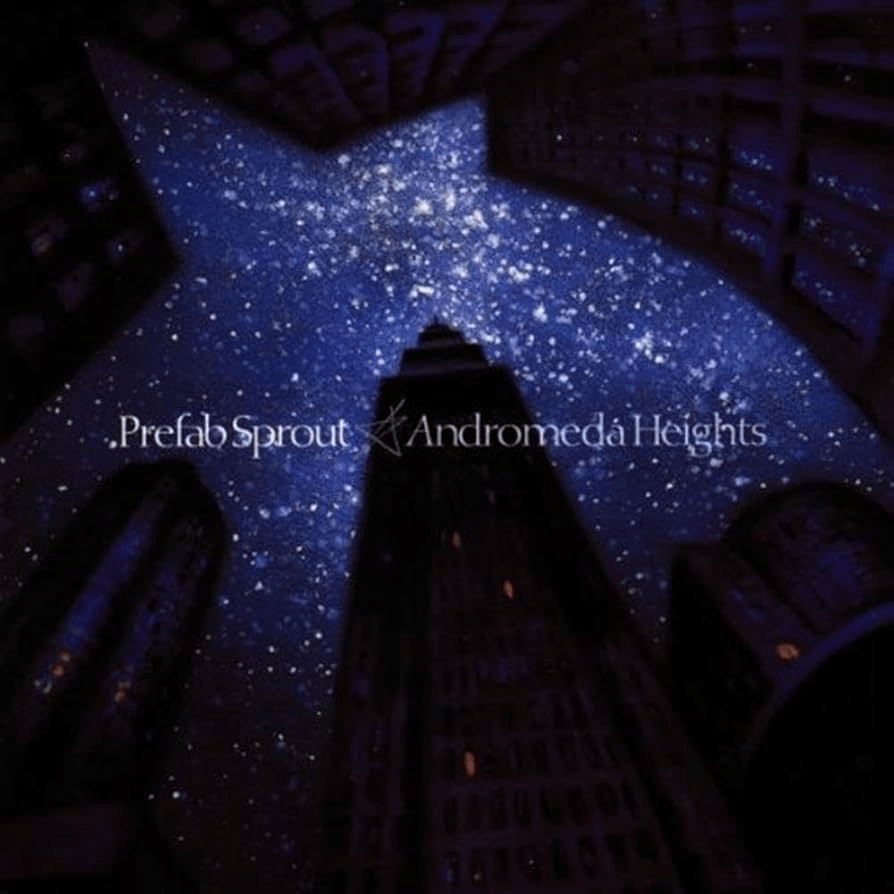
Prefab Sprout hardly stands still, releasing five albums in six years. But fans have to wait until 1997 (yesterday’s compilation helping to tide them over) before hearing a new studio album: Andromeda Heights. In the meantime, the musical landscape has changed: grunge has come and gone, followed by Britpop, and Prefab Sprout now seems to belong to another era.
The album receives a mixed critical reception. It is generally considered a step down from Jordan: The Comeback, but hindsight has elevated it to one of the high points of the band’s discography. The British public, meanwhile, sends the album almost as high up the charts as its predecessors.
Stylistically more cohesive than its predecessor, deeply melodic, all warmth and subtlety, the album is full of arrangements that sound just a little dated: the synthesizers, of course—but we’re used to those. Then there’s one instrument that has to be handled with great care in rock and pop: the saxophone. Here, it’s very often unabashedly kitsch, but that’s something you’ll just have to accept. Paddy’s melodic gift remains undiminished. With his caressing voice, he looks toward the great American songwriters, from Cole Porter to George Gershwin.
We already listened to one track from Andromeda Heights a few years ago: the magnificent Swans, a miracle of delicacy. Now here’s A Prisoner of the Past, with its unmistakable nod to the Ronettes’ Be My Baby—and therefore to Phil Spector.
Swoon en 84, Steve McQueen en 85, From Langley Park to Memphis en 88, Protest Songs en 89, Jordan: The Comeback en 90.
Prefab Sprout ne chôme pas, avec cinq albums en six ans. Mais il faut attendre 1997 (la compilation vue hier permettra de faire patienter un peu les fans) pour entendre un nouvel album : Andromeda Heights. Entre-temps, le monde de la musique a changé : le grunge, puis la britpop, sont passés par là, et Prefab Sprout paraît alors appartenir à une autre époque.
L’album reçoit un accueil contrasté de la part de la critique. On le juge en deçà de Jordan: The Comeback, mais un regard rétrospectif le place désormais parmi les sommets de la discographie du groupe. Le public britannique, quant à lui, hisse l’album presque aussi haut que les précédents dans les charts.
Stylistiquement plus homogène que son prédécesseur, très mélodieux, tout en rondeur et en délicatesse, l’album regorge d’arrangements un brin surannés : les synthés, évidemment — mais ça, on a l’habitude. Il y a, en revanche, un instrument à utiliser avec précaution dans le rock ou la pop : le saxophone. Et là, c’est bien souvent très kitsch ; il faut faire avec. Le brio mélodique est toujours au rendez-vous. Paddy, de sa voix caressante, lorgne du côté des grands compositeurs américains tels que Cole Porter et George Gershwin.
On avait déjà écouté un extrait d’Andromeda Heights, le magnifique Swans, il y a quelques années, miracle de délicatesse. Voici, avec son clin d’œil appuyé à Be My Baby des Ronettes, et donc à Phil Spector, A Prisoner of the Past.

