Paddy doesn’t know it yet, but the band’s golden age—steady releases, critical acclaim, commercial success, and a tight-knit group united behind its leader—comes to an end with Jordan: The Comeback in 1990.
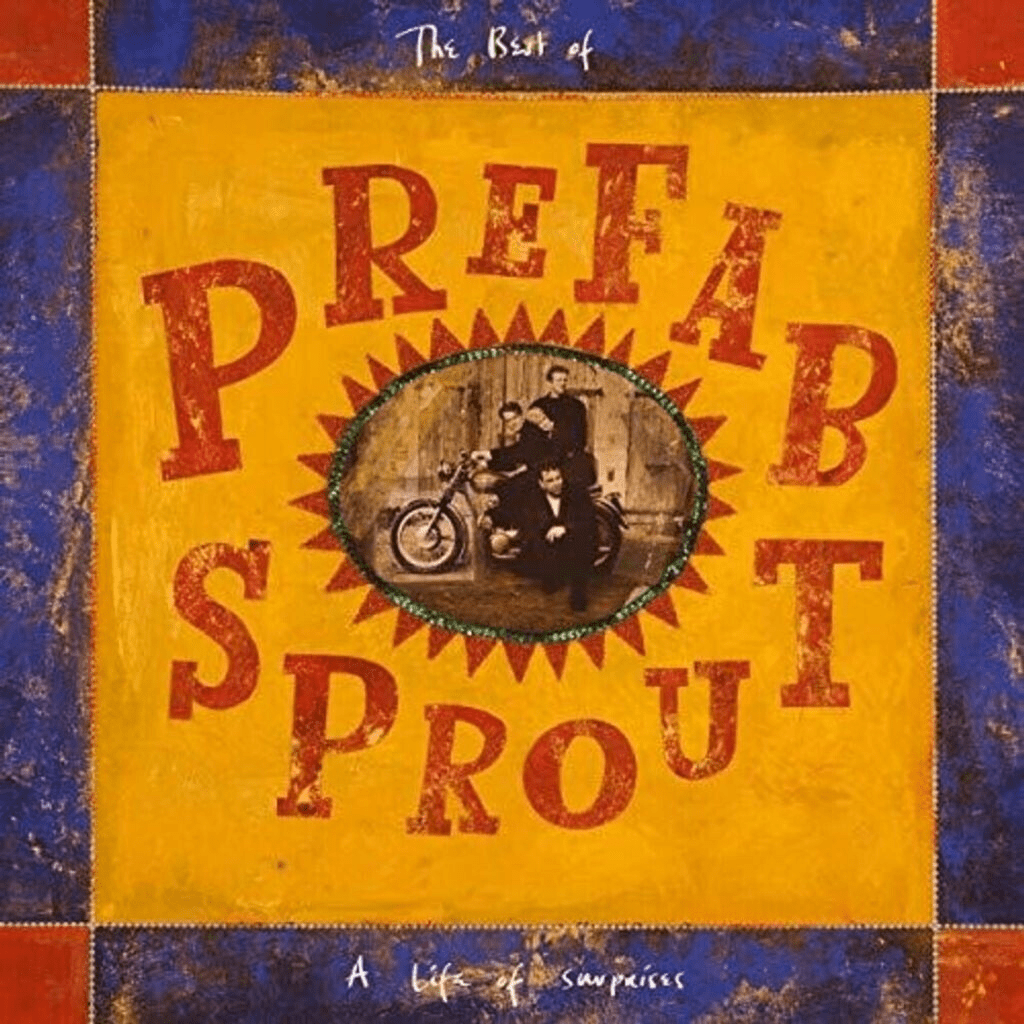
The summer of 1992 saw the release of Prefab Sprout’s first Best Of. That’s where my complicated relationship with the band begins. Around that time, I started reading Les Inrockuptibles religiously. Prefab Sprout were one of the magazine’s darlings (this was before Booba and all the nonsense that followed), and the ads made it clear enough. I was drawn to the cover, even though I’ve never been much of a Best Of person. It’s a purist streak I’ve never really shaken: I prefer proper albums, and the songs that don’t make it onto compilations are often real hidden gems. Anyway…
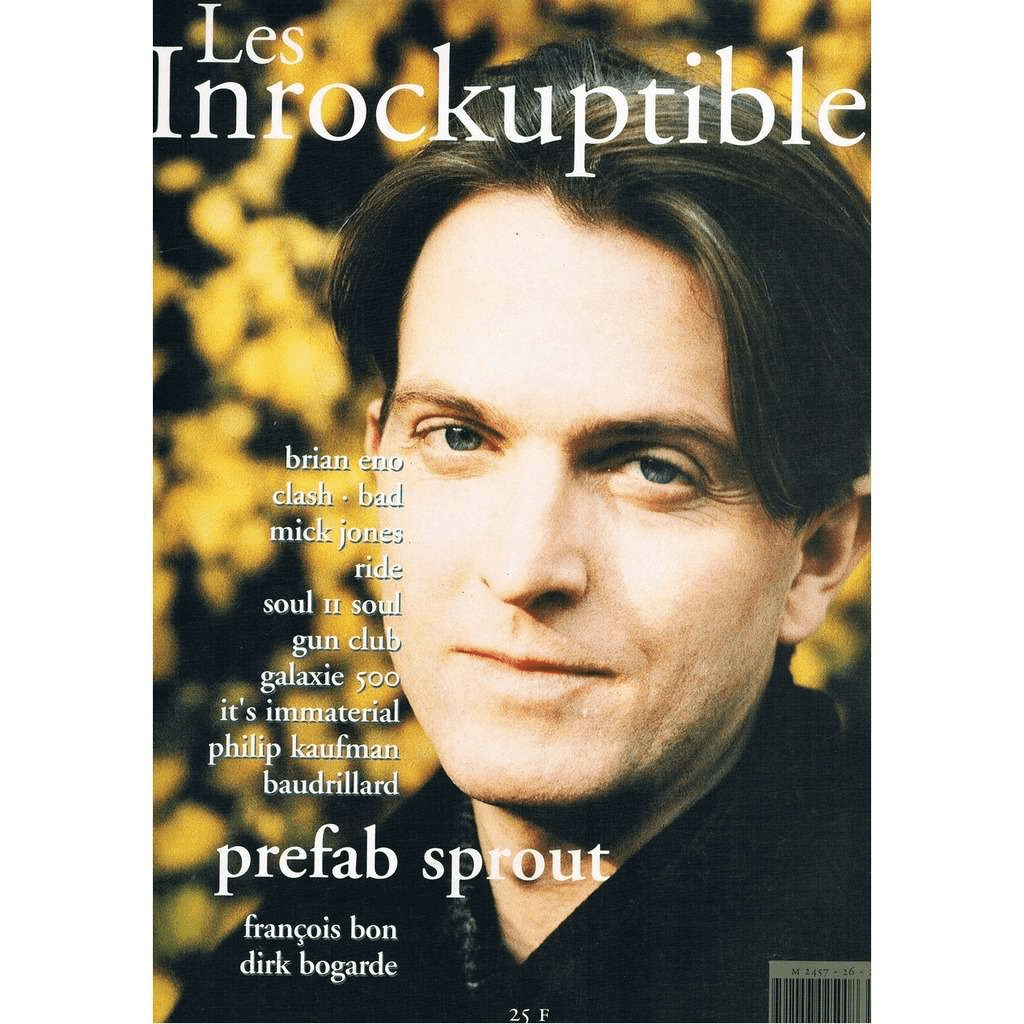
Besides, Paddy—with his cherubic good looks—had already graced the magazine’s cover around the release of Jordan.
So my expectations couldn’t have been more favourable. The problem was that I had no money, no internet, and I’d never actually heard the band until one evening in high school, when a girl put on the compilation I’d been seeing advertised. And bang—the first track was King of Rock’n’Roll. The irony sailed right over my head. All I heard were naff backing vocals, synthesizers, and an unmistakably ’80s production. Utter crap, as far as I was concerned.
It would take me quite a while to come back to them. I can’t even remember what finally led me there (was it Swoon?), but eventually Prefab Sprout found their way into my personal pantheon, even if I still don’t talk about them very much, for fear someone will simply tell me they’re crap.
The Best Of is divided up as follows: four songs from Jordan, four from From Langley Park to Memphis, four from Steve McQueen, one from Swoon (Cruel, naturally—but that’s rather unfair to the album), one from Protest Songs (which makes sense), and two previously unreleased tracks issued as singles: The Sound of Crying and If You Don’t Love Me. The latter would, rather oddly, become one of the band’s biggest American hits, climbing to No. 3 on Billboard‘s Dance chart. To me, though, it’s one of the worst things they ever recorded. It sounds so relentlessly ’80s that I’m reminded of the kind of anonymous French pop that filled FM radio at the time.
Anyway, Paddy—never one to shy away from ambitious, occasionally baffling concept albums (no one’s ever quite worked out what Jordan was supposed to be about, for instance)—next embarked on a project devoted to… Michael Jackson! Then the Gulf War intervened. He went back to the drawing board and rewrote the lyrics around an age-old question: if God exists, how can He allow so much suffering? Not unlike Dear God by fellow pop craftsmen and critical favourites XTC.
The Sound of Crying would go on to enjoy a respectable hit in the UK.
Paddy ne le sait pas encore, mais l’âge d’or du groupe (sorties régulières, reconnaissance critique, succès commercial, groupe soudé derrière son leader) s’achève avec Jordan: The Comeback, en 1990.
L’été 1992 voit la sortie du premier Best Of de Prefab Sprout. C’est là que commence mon histoire contrariée avec le groupe. À cette époque, je me mets à lire Les Inrockuptibles avec assiduité. Le groupe fait partie des chouchous du magazine (c’était avant Booba et toutes les conneries qui ont suivi), et les encarts publicitaires affichent la couleur. Cette pochette m’attire, même si je ne suis pas friand des Best Of. Un côté puriste qui ne m’a jamais vraiment quitté : je préfère les albums, et les morceaux qui ne trouvent pas leur place sur les compilations sont parfois de véritables trésors. Bref…
Et puis Paddy, avec sa tête de petit minet, avait déjà eu les honneurs de la couv’, à l’occasion de Jordan, justement.
Donc voilà, l’a priori est hyper favorable. Mais voilà : pas de thunes, pas d’internet, et je n’ai jamais rien entendu du groupe avant cette fameuse soirée des années lycée où une jeune fille met la compil’ mentionnée plus haut. Et bim : le premier morceau, c’est King of Rock’n’Roll. L’ironie du truc me passe largement au-dessus de la tête. Je n’y entends que des chœurs ringards, des synthés et une production typiquement années 80. De la merde, quoi.
Il faudra donc du temps avant que j’y revienne. Je ne sais même plus par quel biais (avec Swoon ?), mais le groupe finit par entrer dans mon panthéon personnel, même si j’en parle finalement assez peu, de peur qu’on me dise que c’est de la merde, quoi.
Le Best Of se compose ainsi : quatre chansons de Jordan, quatre de From Langley Park to Memphis, quatre de Steve McQueen, une de Swoon (Cruel, évidemment, mais c’est bien injuste pour cet album), une de Protest Songs (assez logique) et deux inédits qui sortiront en single : The Sound of Crying et If You Don’t Love Me. Ce dernier deviendra, assez bizarrement, l’un des plus gros succès du groupe aux États-Unis, où il grimpera jusqu’à la troisième place du classement Dance de Billboard. Pour moi, c’est pourtant l’une de leurs pires productions : ça sonne tellement années 80 que j’ai l’impression d’entendre le tout-venant de la FM de variété française de l’époque.
Bref, adepte des projets thématiques, parfois un peu fumeux — on n’a jamais bien saisi le concept derrière Jordan, par exemple —, Paddy se lance ensuite dans un projet consacré à… Michael Jackson ! Mais la guerre du Golfe passe par là : il revoit sa copie et réécrit les paroles autour d’une vieille interrogation, celle de savoir comment Dieu, s’il existe, peut tolérer tant de drames. Un peu à la manière de Dear God, des autres chouchous orfèvres de la pop, XTC.
The Sound of Crying connaîtra un joli petit succès en Angleterre.

