Jordan is my favorite. Swoon is fragile and strange, Steve McQueen polished and instantly captivating, while Jordan: The Comeback possesses a hazy, mysterious aura that mirrors its cover art: a sunken treasure with an enigmatic concept (Jordan? Jesse James? Elvis?), divided into four sections whose individual identities aren’t immediately obvious. It’s a long album—19 stylistically diverse songs—but never a dull one.
This is where the comparison to Brian Wilson feels most apt. It’s like imagining a Brian Wilson who actually completed Smile without losing himself in the labyrinth of an artistic ambition shattered by madness.
Paddy McAloon reaches for the stars, with Thomas Dolby behind the controls. Yet despite the immaculate, synth-driven production, there’s an emotional vulnerability running through the entire record, right up to the closing track, Doo Wop in Harlem—a beautifully understated tribute to a departed friend.
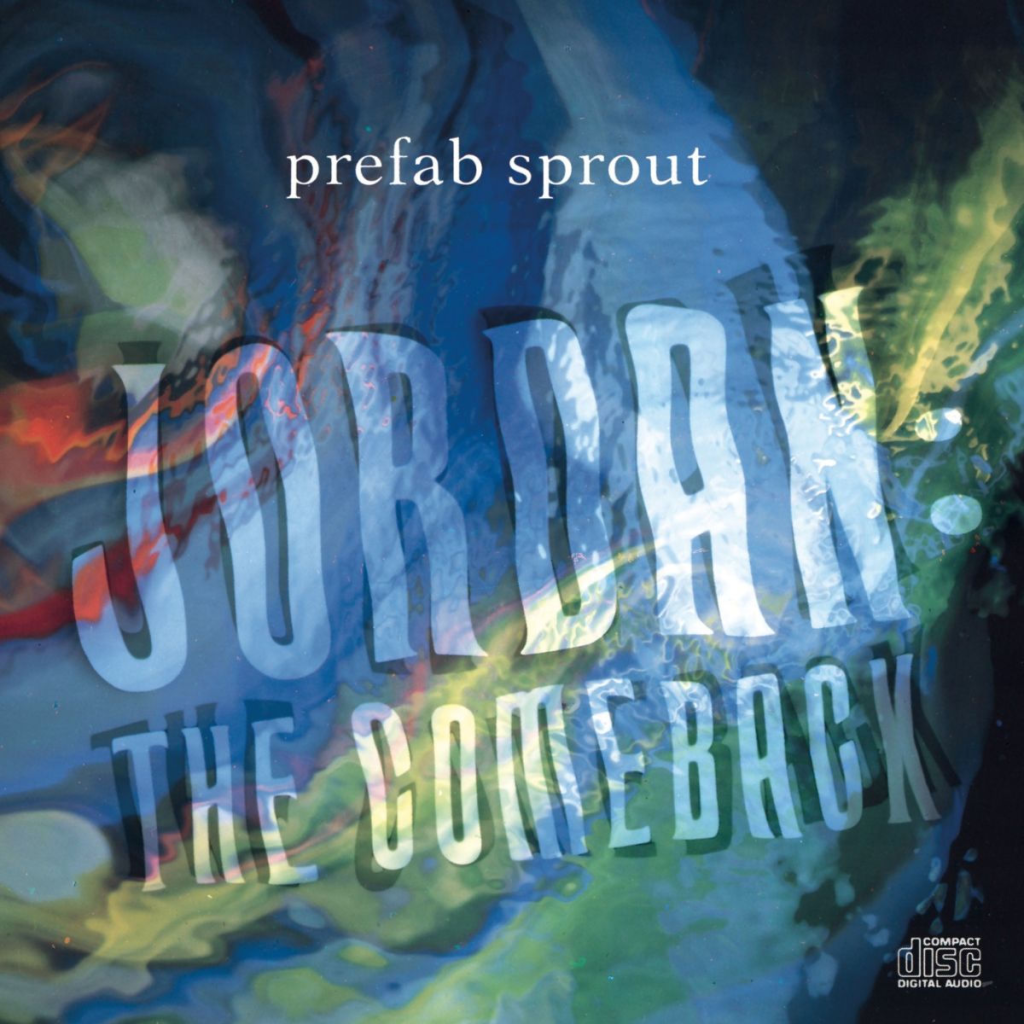
Jordan, c’est mon préféré. Swoon est fragile et bizarre, Steve McQueen précieux et accrocheur, Jordan: The Comeback possède une aura floue et mystérieuse, à l’image de sa pochette, un trésor englouti, au concept sibyllin (Jordan ?, Jesse James ? Elvis ?), découpé en 4 parties dont la singularité propre peine à sauter aux yeux. Long album, 19 chansons au style varié, jamais ennuyeux.
C’est ici que la comparaison avec Brian Wilson me parait la plus pertinente. Comme un Brian Wilson qui aurait réussit son Smile, sans se perdre dans les méandres d’une ambition artistique percuté par la folie.
Paddy McAloon tutoie les étoiles, Thomas Dolby est derrière les manettes, mais je ne sais pas, tout en étant toujours très léché, à dominance synthétique, il y a une émotion et une fragilité qui traverse le disque, jusqu’à ce final, Doo Wop in Harlem, hommage à un ami défunt, superbe de retenue.

