We recently mentioned Coleman Hawkins as an influence on the giant Sonny Rollins, who passed away at the end of May.
In fact, this gentleman is quite simply the man who gave the saxophone a status equal to that of the trumpet during the 1920s. A symbol of classic (pre-bebop) jazz, influenced by the pianist Art Tatum and above all by Louis Armstrong, he established himself as the first great tenor saxophone soloist. Powerful and expressionistic, his playing would influence countless jazz musicians, although, as we shall soon see, he would find in Lester Young a contemporary rival whose more ethereal style would also prove enormously influential.
The year is 1939. After playing in one of the great swing-era big bands (that of Fletcher Henderson) and spending time in Paris, Hawkins returned to the United States and recorded what remains, quite possibly, his masterpiece.
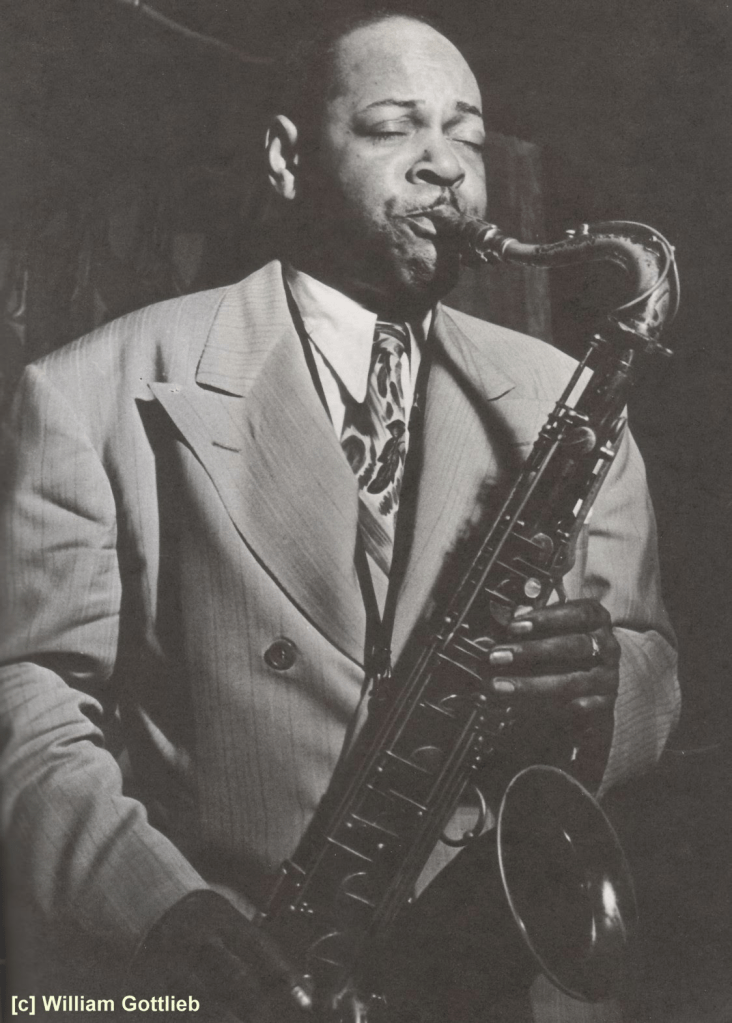
On mentionnait récemment Coleman Hawkins comme influence du géant Sonny Rollins, disparu fin mai.
En fait, ce monsieur est tout simplement celui qui a donné au saxophone une place équivalente à celle de la trompette au cours des années 1920. Symbole du jazz classique (pré-bebop), influencé par le pianiste Art Tatum et surtout par Louis Armstrong, il s’impose comme le premier grand soliste de saxophone ténor. Puissant et expressionniste, son jeu influencera quantité de jazzmen, même si, comme on le verra très vite, il trouvera en Lester Young un rival contemporain au style plus évanescent qui, lui aussi, fera école.
Nous sommes ici en 1939. Après avoir joué dans un grand orchestre de l’époque du swing (Fletcher Henderson) et séjourné à Paris, Hawkins rentre aux États-Unis et grave ce qui reste probablement son chef-d’œuvre.
 Une humeur... une chanson
Une réflexion sur “Hawkins”