Okay, we’ve reached the end of the road… the seventies… After that, I’m not sure we got anything truly new. Plenty of good stuff, yes. Truly new? Probably not… Or at least not in a way as dramatic as what we’ve seen so far.
What is it called? Fusion, Jazz-Rock, Jazz Fusion…
And this is where you have to separate the wheat from the chaff. In the seventies, a lot of people jumped on the jazz-rock bandwagon—people coming from rock rather than jazz. But since it was often really boring, the punk brats eventually spat right in its face because, come on, let’s be serious: solos are fine, but only for so long.
When was it? From the late sixties to the early eighties.
Who are the key figures? Miles Davis (yes, him again; the guy is enormous, a legitimate contender for the title of greatest artist of the twentieth century), Herbie Hancock (who passed through Miles Davis’s band), Weather Report (featuring people who passed through Miles Davis’s band), Mahavishnu Orchestra (featuring a guitarist who passed through Miles Davis’s band)…
Where did it happen? Pretty much everywhere.
What instruments are involved? The traditional jazz instruments, but also electric guitar, electric bass, synthesizers…
What did it grow out of? Miles Davis got hit by a few things himself: Hendrix, Sly Stone, for example. And just like that, he revolutionized jazz all over again.
But careful—this time he really ruffled some purist feathers. There’s a world of difference between Bitches Brew and Birth of the Cool. A vast world.
What does it sound like? At its best, an incandescent mass of sound: virtuosic, astonishing, overwhelming. At its worst, music by the yard, packed with endless, soulless solos.
And what should we listen to as the perfect example?
Chameleon.
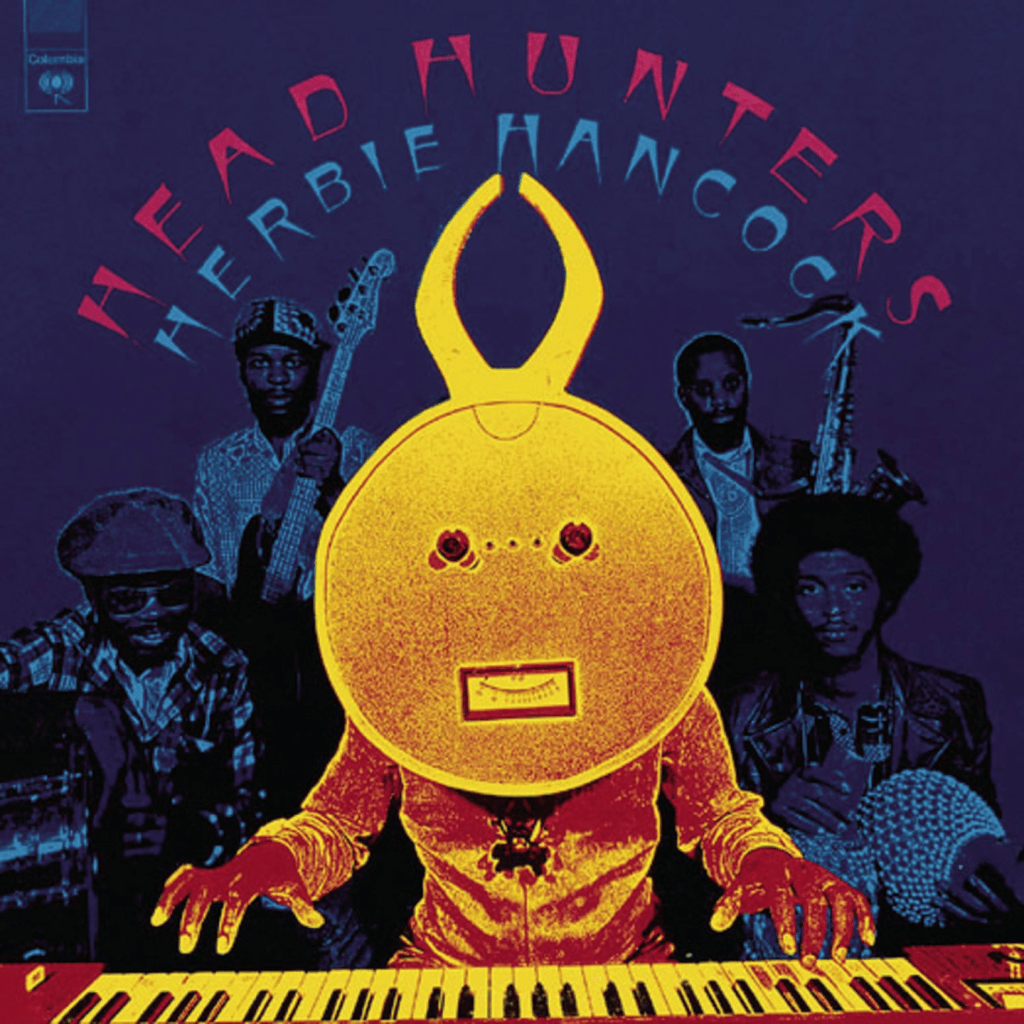
Herbie Hancock, 1973. We’ve already featured another track from this album. Funky jazz with that glorious seventies sound we love around here. Easier to listen to—and to love—than Davis’s albums, which are just a touch more demanding…
Ok, là, on est au bout du truc… les seventies… Après ça, pas certain qu’on ait eu du vraiment neuf. Du bon, oui. Du vraiment neuf, sans doute pas… Ou alors pas de manière aussi percutante que ce qu’on a vu jusqu’ici.
Comment ça s’appelle ? Fusion, Jazz-Rock, Jazz Fusion…
Et attention, c’est là qu’il faut trier le bon grain de l’ivraie. Le jazz-rock, dans les seventies, pas mal de gens s’y sont mis, des gens venus du rock et non du jazz. Mais comme c’était souvent vraiment chiant, les morveux du punk lui ont mis un bon glaviot dans la tronche parce que, bon, faut pas déconner, les solos, ça va bien deux minutes.
C’est quand ? De la fin des sixties jusqu’au début des eighties.
C’est qui ? Miles Davis (oui, encore lui ; le mec est immense, il peut concourir au titre de plus grand artiste du XXe siècle), Herbie Hancock (passé chez Miles Davis), Weather Report (avec des gens passés chez Miles Davis), Mahavishnu Orchestra (avec un gratteux passé chez Miles Davis)…
C’est où ? Un peu partout.
Quels sont les instruments ? Les trucs traditionnels du jazz, mais aussi la guitare électrique, la basse électrique, les synthés…
C’est né de quoi ? Miles Davis s’est lui aussi pris des trucs dans la figure : Hendrix, Sly Stone, par exemple. Et hop, il révolutionne le jazz à nouveau.
Mais attention, là il a défrisé les puristes, entre Bitches Brew et Birth of the Cool, il y a un monde. Un vaste monde.
Ça ressemble à quoi ? Au mieux, un magma sonore incandescent, virtuose, inouï… Au pire, une musique au kilomètre, avec des solos interminables et sans âme.
Et on écoute quoi comme parfait exemple ?
Chameleon.
Herbie Hancock, en 1973. On avait déjà mis un morceau de cet album. Du jazz funky au son seventies comme on l’adore ici. Plus évident à écouter et à aimer que les albums de Davis, un tantinet plus exigeants…

