Bebop radical? Well, hang on a second—the free guys are about to make your ears spin!
What is it called? Free Jazz, Avant-Garde, New Thing!
When was it? Early sixties to the mid-seventies.
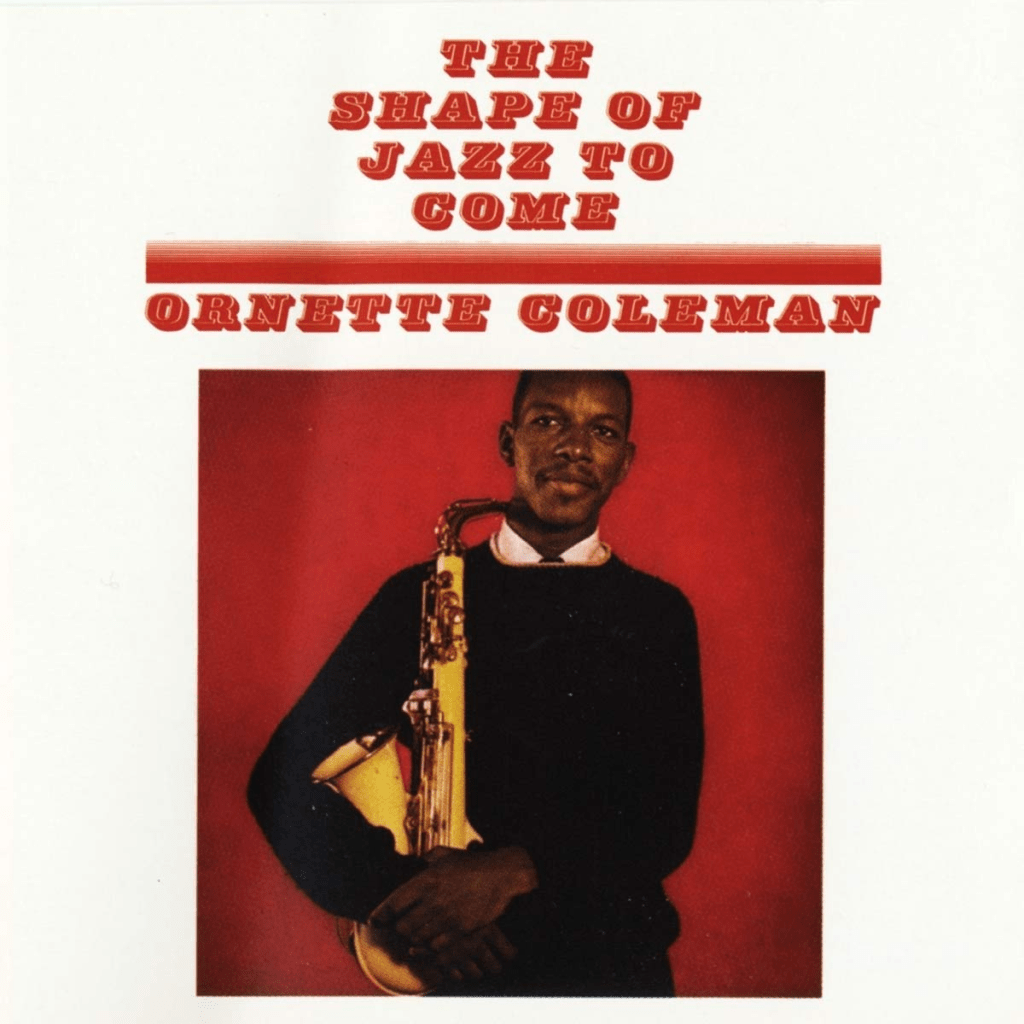
Who are the key figures? Ornette Coleman (for God’s sake, he’s the guy who released all those records with manifesto-like titles: Something Else!!!!, The Shape of Jazz to Come, Change of the Century , Free Jazz, This Is Our Music…), Albert Ayler, Sun Ra, Cecil Taylor…
Where did it happen? New York City, once again… but not only there.
What instruments are involved? Same old, same old.
What did it grow out of? Well, it’s hard not to connect it to the Civil Rights Movement: a form of musical and political radicalism, a middle finger to convention.
What does it sound like? Well… Bebop: lots of notes and lots of chords. Cool: fewer notes. Modal: fewer chords. Free? Fuck the chords!
And what should we listen to as the perfect example?
As it happens, we’ve already listened to the perfect example*. Free jazz, but listenable:
Lonely Woman.
Don Cherry on cornet, Charlie Haden on bass, Billy Higgins on drums and, of course, Coleman on saxophone.
If we take a closer look at what’s going on, we start with a bass-and-drums introduction, then the cornet and saxophone play the theme together in unison several times. It’s a plaintive theme that probably reflects the title… Then Coleman launches into his solo (around 1:48), but, well, he’s somewhere else entirely… It’s not common… Hence free jazz, and hence why some ears might be a little surprised. Then the theme returns and we finish with bass and drums: the circle is complete.
It’s 1959.
*I could have picked something by Cecil Taylor, but that would be a good way to start an argument with your wife, husband, or neighbours. For the curious, try the album Unit Structures sometime over breakfast.
Le bop, radical ? Well, attends un peu, le free, ça va te faire vriller les tympans !
Comment ça s’appelle ? Free Jazz, Avant-Garde, New Thing !
C’est quand ? Début des sixties – milieu des seventies.
C’est qui ? Ornette Coleman (bordel, c’est lui qui a sorti tous ces disques aux titres en forme de manifeste : Something Else!!!!, The Shape of Jazz to Come, Change of the Century , Free Jazz, This Is Our Music…), Albert Ayler, Sun Ra, Cecil Taylor…
C’est où ? New York City, encore et toujours, mais pas que…
Quels sont les instruments ? Same old, same old.
C’est né de quoi ? Hum, difficile de ne pas faire le lien avec les luttes pour les droits civiques : une forme de radicalité musicale et politique, un doigt d’honneur aux conventions.
Ça ressemble à quoi ? Hum… Bebop : plein de notes et d’accords. Cool : moins de notes. Modal : moins d’accords. Free ? Fuck les accords !
Et on écoute quoi comme parfait exemple ?
Alors, en fait, on a déjà écouté le morceau parfait*. Du free, mais écoutable :
Lonely Woman.
Don Cherry au cornet, Charlie Haden à la contrebasse, Billy Higgins à la batterie et, donc, Coleman au saxo.
Si on se penche un peu sur ce qui se passe, on a une intro basse-batterie et ensuite le cornet et le saxo pour le thème, à l’unisson, plusieurs fois. Un thème plaintif qui renvoie probablement au titre… Ensuite, Coleman attaque son solo (vers 1 minute 48) mais, bon, il est ailleurs… C’est pas usuel… D’où le free jazz, d’où les oreilles qui peuvent être surprises… Ensuite, reprise du thème et on termine sur basse-batterie : la boucle est bouclée.
On est en 1959.
*J’aurais pu mettre un truc de Cecil Taylor, mais là, c’est un coup à t’engueuler avec ta femme, ton mari ou tes voisins. Pour les curieux, tentez l’album Unit Structures, par exemple, au petit-déjeuner.

