Well, well, well… I’ve got a real soft spot for this one.
What is it called? Hard Bop… and, even if it makes some purists wince because they’re not quite the same thing, Soul Jazz (hard bop is heavily seasoned with blues, and soul jazz… well, the clue’s in the name, isn’t it?).
When was it? Mid-fifties to mid-sixties.
Who are the key figures? Art Blakey, Horace Silver, Clifford Brown, Sonny Rollins… now that’s a lineup!
Where did it happen? NEW YORK CITY!
What instruments are involved? Nothing changes: trumpet, saxophone, double bass, drums, piano.
What did it grow out of? Well, bebop. But it’s not like in rock music: hard bop isn’t the equivalent of hard rock. No, you take bebop, add the blues and the groove back in as a reaction to cool jazz, and there you have it.
What does it sound like? Groovy, catchy, bluesy, and sometimes full of soul. It’s good. Very good! And powerful!
And what should we listen to as the perfect example?
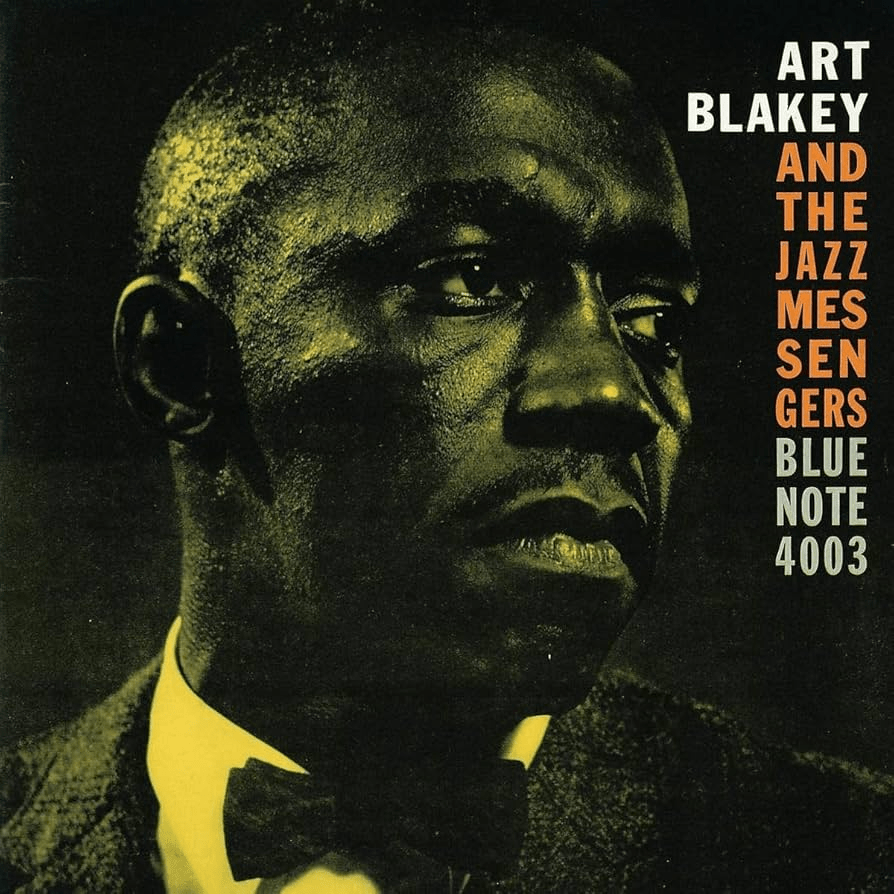
Moanin’.
Art Blakey, 1958!
Well, well, well, là, j’ai un gros faible pour ce genre…
Comment ça s’appelle ? Hard Bop… et, même si ça fait un peu grincer des dents parce que ce n’est pas tout à fait la même chose, Soul Jazz (le hard bop est dosé en blues et le soul jazz, ben, c’est évident, non ?).
C’est quand ? Mi-fifties – mi-sixties.
C’est qui ? Art Blakey, Horace Silver, Clifford Brown, Sonny Rollins… Encore du beau, beau monde !
C’est où ? NEW YORK CITY !
Quels sont les instruments ? On ne change rien : trompette, saxo, contrebasse, batterie, piano.
C’est né de quoi ? Ben, du bop. Mais ce n’est pas comme dans le rock : le hard bop n’est pas l’équivalent du hard rock. Non, on simplifie un peu le bop, mais on remet du blues et du groove en réaction au cool.
Ça ressemble à quoi ? Groovy, assez accrocheur, bluesy et parfois rempli de soul. C’est bon, très bon ! Et puissant !
Et on écoute quoi comme parfait exemple ?
Moanin’
Art Blakey, en 1958 !

