Come on, come on, no slacking off! Put on your tuxedos and let’s head to the cabaret… or in a seedy gambling den!
What is it called? Swing, Big Band Jazz.
When was it? From the 1930s to the mid-1940s—the golden age!
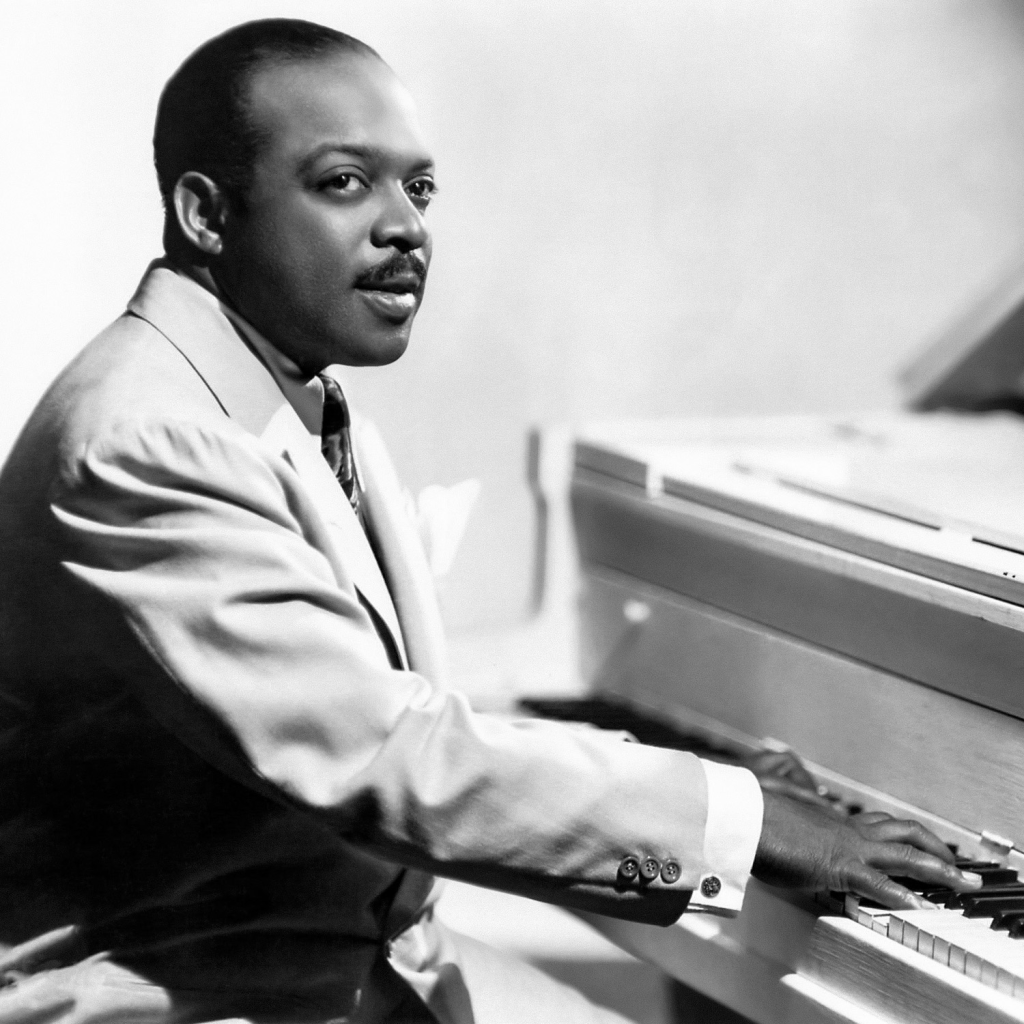
Who are the key figures? Count Basie, Duke Ellington, and some white bandleaders like Benny Goodman or Glenn Miller…
Where did it happen? Kansas City, New York, and Chicago! Why Kansas City? Because the local political boss let people drink and gamble during Prohibition!
What instruments are involved? Lots and lots of instruments, including the saxophone (almost absent from New Orleans Jazz). A big band, in other words!
What did it grow out of? New Orleans Jazz, of course! But with more musicians and an even stronger emphasis on dancing!
What does it sound like? Powerful, catchy, and made for dancing!
And what should we listen to as the perfect example?
One O’Clock Jump.
Count Basie, 1937! Kansas City baby!
Allez, allez, on ne faiblit pas ! On sort les smokings et on file au cabaret… ou dans un tripot mal famé !
Comment ça s’appelle ? Swing, Big Band Jazz.
C’est quand ? Des années 1930 au milieu des années 1940, pour l’âge d’or !
C’est qui ? Count Basie, Duke Ellington et des blancs-becs comme Benny Goodman ou Glenn Miller…
C’est où ? Kansas City, New York et Chicago ! Pourquoi Kansas City ? Parce que le politicien local laissait les gens boire de l’alcool et jouer pendant la prohibition !
Quels sont les instruments ? Plein, plein d’instruments, dont le saxophone (quasi absent du New Orleans Jazz). Un big band, quoi !
C’est né de quoi ? Du jazz New Orleans, pardi ! Mais avec plus de monde et un côté dansant encore plus affirmé !
Ça ressemble à quoi ? C’est puissant, accrocheur et fait pour danser !
Et on écoute quoi comme parfait exemple ?
One O’Clock Jump.
Count Basie, 1937 ! Kansas City baby!

