In ’98, Public Enemy no longer had the wind in their sails. The days when the group was reinventing hip-hop were long gone. Still supported by the specialist press and respected by the new generation, their aggressive sound—packed with samples, fast tempos, and a political, confrontational message—had gone out of style, replaced by a smoother, funkier kind of rap. Wu-Tang Clan and Dr. Dre and Snoop Doggy Dogg’s G-Funk had reshaped the landscape, Jay-Z’s businessman-rap was about to take over, and, a bit off to the side, Black Star or Outkast were trying new things…
Worse: new legislation on sampling (those little bits of music snatched from here and there which, once assembled, formed the raw material of ’80s rap—and especially Public Enemy’s sonic magma) simply made impossible—because of the huge financial cost—the kind of production that had defined the Long Island group’s uniqueness. In short, the public had moved on.
However, loyal as ever (see Do the Right Thing and the use of “Fight the Power” almost ten years earlier), Spike Lee invited them to work on the He Got Game soundtrack.
And the title track… They sample the brilliant “For What It’s Worth” by Buffalo Springfield and even bring in Stephen Stills to take part in the recording… They dial things down and… pffff, that’s the proof right there. You put this on, and you think: the sample, the catchy chorus, Stills’ entrance, the gospel backing vocals that Flavor Flav can riff on however he likes… Public Enemy number one!
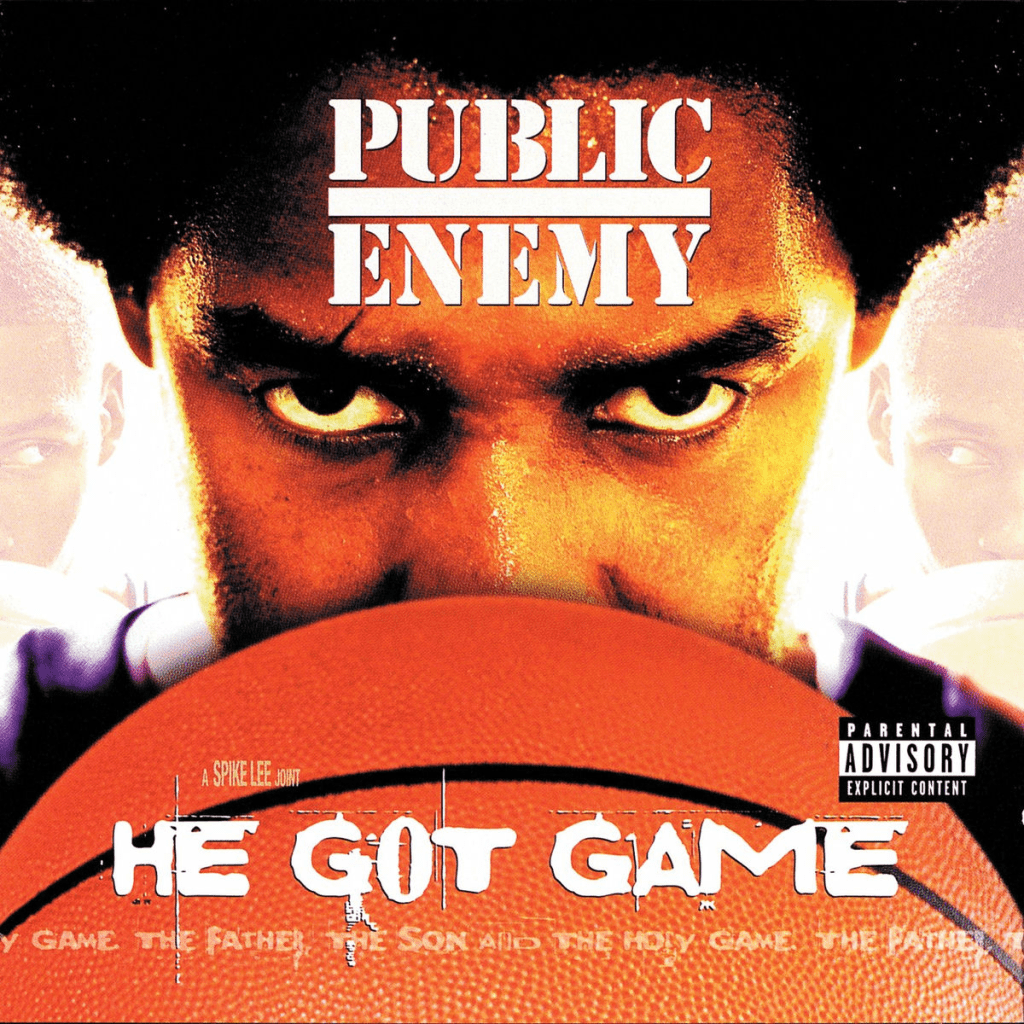
En 98, Public Enemy n’a plus le vent en poupe. Il est loin, le temps où le groupe réinventait le hip-hop. Toujours soutenu par la presse spécialisée et respecté par les nouvelles pousses, leur son agressif, bourré de samples, sur des tempos rapides, et leur message politique et vindicatif sont passés de mode, au profit d’un rap plus moelleux et funky. Le Wu-Tang Clan ou le G-Funk de Dr. Dre et Snoop Doggy Dogg sont passés par là, le rap d’hommes d’affaires de Jay-Z s’apprête à déferler, et, un peu à l’écart, Black Star ou encore Outkast essayent de nouvelles choses…
Pire : les nouvelles législations sur les samples (ces petits morceaux de musique chipés à droite à gauche et qui, assemblés, constituaient la matière première du rap des années 80 et notamment le magma sonore de Public Enemy) rendent tout simplement impossible — coût financier énorme oblige — le type de production qui a fait la singularité du groupe de Long Island. Bref, le public s’est tourné vers autre chose.
Cependant, fidèle (voir Do the Right Thing et l’utilisation de « Fight the Power » près de dix ans plus tôt), Spike Lee les invite pour la BO de He Got Game.
Et la chanson du même nom… Ils samplent le génial « For What It’s Worth » de Buffalo Springfield et invitent même Stephen Stills à participer à l’enregistrement… Ils calment le jeu et… pffff, c’est la démonstration. Tu mets ça, et là tu te dis : le sample, le refrain accrocheur, l’arrivée de Stills, les chœurs gospel sur lesquels Flavor Flav peut broder à sa guise… Public Enemy number one !
 Une humeur... une chanson